
The Orienteer Kid
The generation we've been waiting for has a moral compass and a bad map. Here's how to mentor them.
For 20 years, my 11th grade English students faced the same Xeroxed magazine article on the first night of school. Their highlighters squeaked and their eyes darted nervously over words that left them pinned and wriggling.
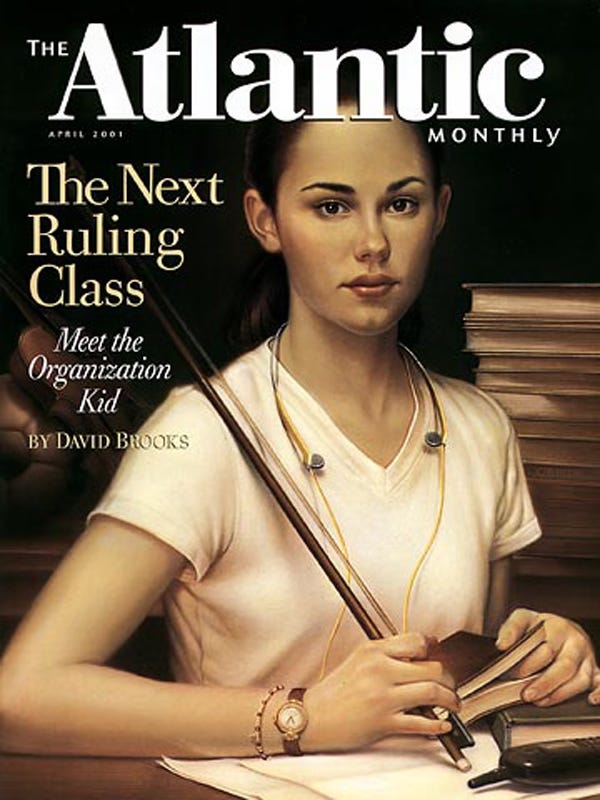
In “The Organization Kid,” April 2001’s Atlantic cover piece — 25 years old this month — David Brooks visited Princeton to learn what tomorrow’s leaders — now known as the Millennials — were like. He found them eminently amiable, happily overscheduled, and perpetually cultivating their résumés: confident in their elite destinies. Yet amidst their ascent into the meritocracy, Brooks noticed, they lacked something essential: a sense of character and a willingness to question authority.
The next day I would sit at the head of our Harkness table, point my thumbs upwards and spread them apart, and play Devil’s Advocate: “All of you are Organization Kids.”
In polite, half-sentenced bursts, they would always object.
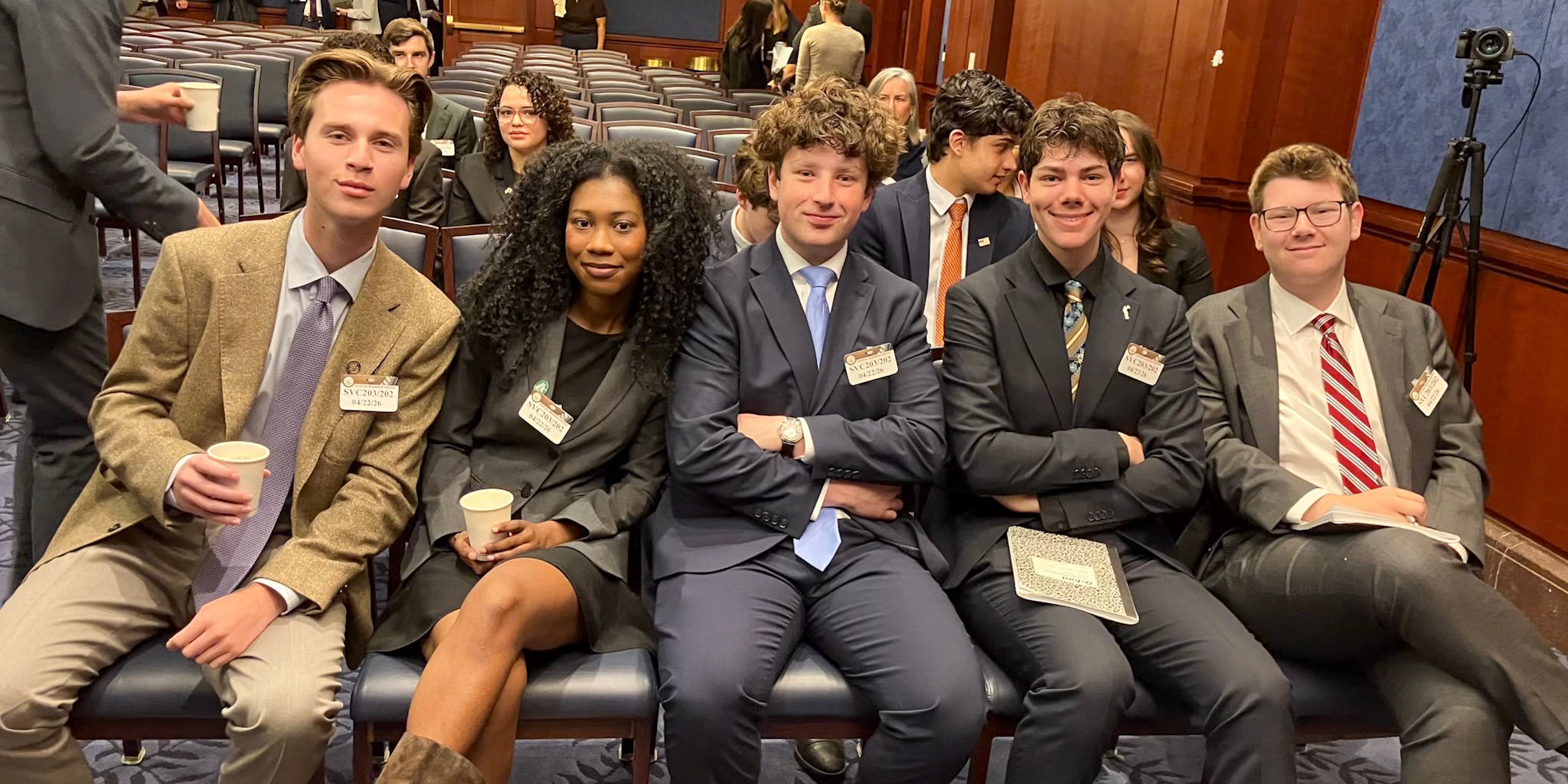
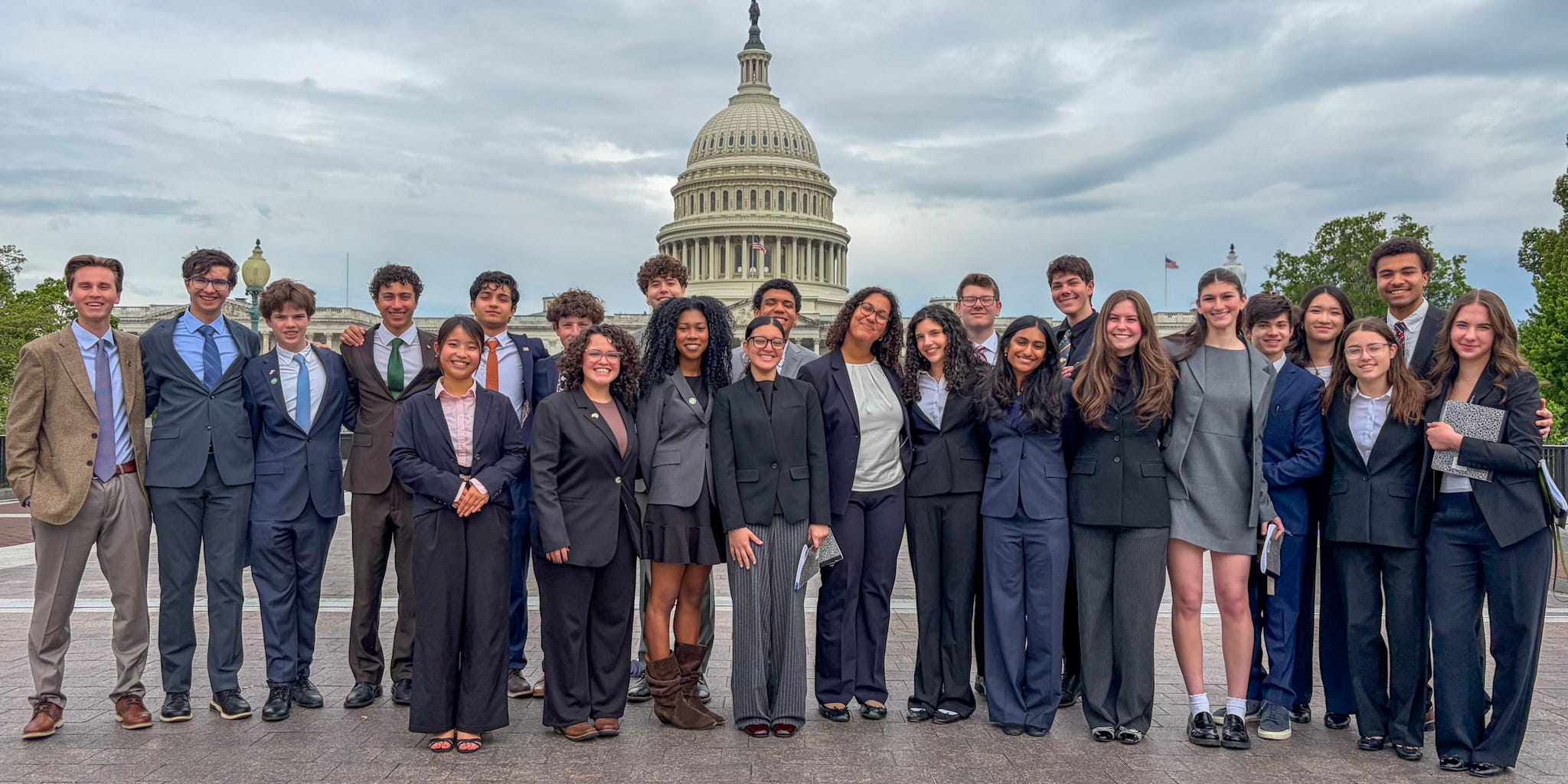
“If you aren’t Organization Kids,” I would retort, “I dare you to do this: find something that your sending school needs to change. Organize your classmates. Go on strike until your school’s leadership acts.” (Important note here: I lead a semester-long program for high school juniors across the United States, with campuses in DC, London, and Johannesburg.)
They would chafe:
“That sounds mean.”
“Why would we want to do that?”
“We would get in trouble.”
“No one would join us.”
“What would this mean for our college applications?”
And, perhaps most tellingly, “We can’t think of anything important enough.”
And so, for 20 years, on the second day of class, I would lean back dramatically in my chair, push my hands out with palms up, and crow, “Ladies and Gentlemen, I give you another group of Organization Kids.”
A touchstone thought piece and a touch of theater that echoed and challenged my students for the rest of the semester. Am I an Organization Kid? Do I want to be one? I still have graduates return and talk about succumbing to and overcoming the archetype.
***
I no longer assign “The Organization Kid.” It wouldn’t make sense to this generation.
Much has been written about Gen Z already, and most of it isn’t flattering. We don’t need a Brooks-like exposition to remind us here; only a smattering of pejoratives: anxious, coddled, depressed. (Cue Bye Bye Birdie: Why can’t they be like we were, perfect in every way? Oh, what’s the matter with kids today?)
But if you sweep that top layer away, you’ll see something much more hopeful. You’ll see that these kids are the ones we waited for during the Organization Kid Age. And they need a new name.
It’s time to replace “The Organization Kid” with “The Orienteer Kid.”
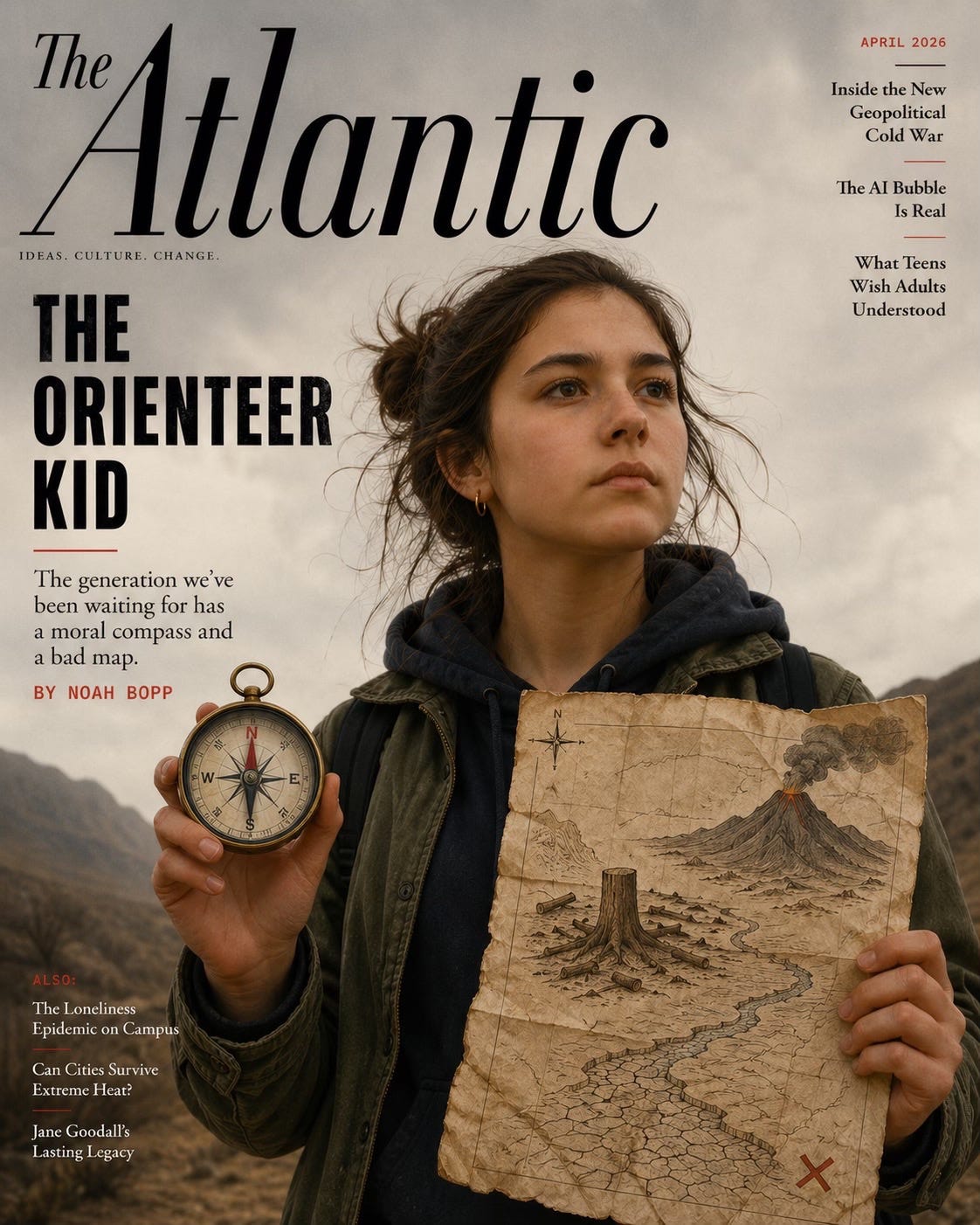
Classic orienteering requires a compass — throw that GPS out for now, please — and the ability to find true North. Unlike many Millennials, the best of Gen Z carry their moral compasses front and center. They come to my classroom ready to organize, to launch a strike, to walk out of class, to pitch tents on the Quad. It’s exhausting and exhilarating.
The trouble is, their orienteering often veers. It leads them to “do their own research” — to distrust shared sources of knowledge — to revere online demagogues, to devolve legitimate difference into a morass of shouting and sloshing. (At the extremes a very few even manifest their morality with violence.) Their sometimes-overwrought language — it was hard to be heard over the din of COVID, George Floyd, and January 6th after all — can make us wary of moral warp. (One of my former students wrote me that their University’s refusal to hand out water during a campus takeover was “literally a war crime.”)
Why are they getting it wrong at the same time they are getting it right?
Because orienteering requires more than a compass. It also requires a map. And this is the essential thing that we miss when we spend all of our time carping over TikTok: the real problem isn’t all the tech: it’s that we’ve passed Gen Z a lousy map.
What do I mean? I mean that Orienteer Kids are activating their ethical cores at a time when the democratic institutions that provided guideposts to previous generations — the media, universities, our political system — are failing. Indeed, there has never been an era or a generation that has trusted the foundational elements of our democracy less.
For more than a few good reasons, our fearless orienteers are choosing to go it alone.
This frustrates those of us who are older. We have long seen the trees, rivers, and mountains — the institutions we continue to trust — on our map. We read the New York Times, push our kids toward the Ivy League, donate to Congressional candidates. But this generation sees nothing of the sort. For them, the trees have been chopped down, the rivers have dried up, and the mountains are now exploding volcanos. Rather than providing Gen Z with adequate civic navigation tools, our biggest gifts to the Orienteer Kid seem to be social media algorithms and artificial intelligence hacks that distract from authenticity, connection, and meaning.
Is it any wonder that they’ve decided that something is broken? Is it any wonder that their attempts to self-guide often leave us rubbing our temples?
Is there a way to help?
Yes.
The first step requires recognizing something unsettling: the Orienteer Kids are right. The center is not holding well these days. Older generations have unleashed ever-increasing waves of new technology that overwhelm our institutions and fray our norms. Older generations do not have the slightest idea how to talk to each other anymore: we prize weaponized language and, well, weapons. It should not surprise us that young people today cannot navigate by the weakened institutions we have gifted them.
The second step is harder — and also an extraordinary opportunity.
If young people cannot rely on our institutions to orient themselves, then the work of orientation falls to us: not as generational know-it-alls — OK, Boomer — but as collaborative-minded mentors; not as lamenters of what might have once made America great, but as co-creators of civic beacons that provide refuge and oasis in a daft and dangerous world.
Collaboration and co-creation are essential: the new map cannot be dittoed or downloaded; it must be drawn together.
In my classroom, this means both teachers and students must resist the temptation to dismiss when convictions outrun understanding. It means cultivating a capacity for welcome — especially the awkward, the unfamiliar, the disadvantaged, the unaware. It means leavening the focus on impact — how that made you feel — with curiosity about intent — what do you think she meant? It means trading echo chambers for empathy — calling in when it might feel safer shutting out. It means seeing – issues, texts, speakers, classmates, paintings — as fully as possible before judging. It means tempering conviction with the discipline to seek and follow the evidence, the courage to revise, and the humility to change one’s mind.
This offers Gen Z something sturdier than today’s ambient nihilism. And we can do more: In addition to crafting new landmarks, we should also point out where the fraying map still holds — in honest reporting, in careful scholarship, in the institutions that, while struggling and imperfect, remain worth honoring.
***
On the first day of class, I used to accuse my students of being Organization Kids. Now, I no longer worry if they are brave enough to challenge the world they have inherited. Instead, I try to push them toward something harder: moral orienteering — picking through the rubble with care and building something new, hopeful, and inspiring.
The Orienteer Kids do not need us to hand them a compass. They already have one. What they need is help learning how to read the terrain before them.
The truth is, one day the Orienteer Kids will inherit the earth. Will we let them wander it alone, or help them find their way?
Intriguing
Compelling